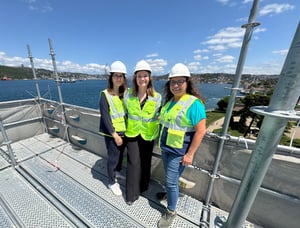
On International Women’s Day, Treet CEO Outi Kallio shares her perspective on global industry leadership, sustainable timber construction, and the role of women shaping the future of industrial innovation.
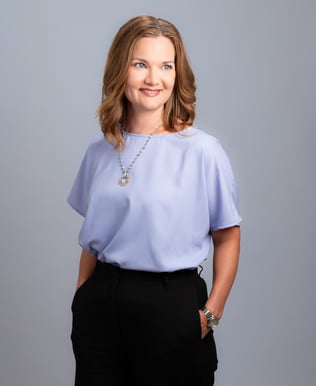
With more than 15 years of experience leading international business across Europe and Asia, and a background that combines international business and global diplomacy, Outi brings a unique perspective to building partnerships across borders.
Her career spans industries including coatings, construction, manufacturing and energy, and her work today focuses on helping drive the transition toward safer and more sustainable timber construction worldwide. In this conversation, she shares insights on leadership, international collaboration and the evolving role of women in industrial sectors.
Your career spans many international markets. What originally drew you to global business?
From early in my career I was fascinated by how industries and global developments connect across borders. Working internationally forces you to step into the unknown, look beyond your own perspective and understand different cultural, political and economic environments. That complexity and interconnectedness is what makes global business so interesting. Over the years I’ve had the opportunity to work widely across Europe and Asia, and those experiences have shaped the way I approach leadership today with curiosity, openness and a long-term view of partnerships. Exploring new markets often feels like being on an endless expedition where adventures are simply part of the journey.
You have worked across sectors such as construction, energy, and advanced materials. What do these industries have in common?
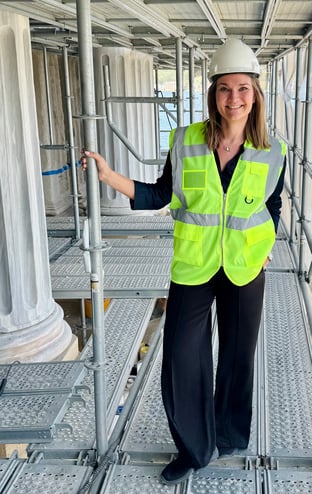
These sectors all sit at the foundation of modern economies. They are industries where innovation has a very tangible impact whether it’s infrastructure, energy systems or new materials. What I find particularly interesting is how technological innovation, regulation and world developments intersect in global markets. Leaders in these industries must constantly navigate both industrial development and broader global trends.
Your work involves close collaboration with partners across different countries and institutions. How important is international cooperation in today’s industrial landscape?
It is absolutely critical. Many of the challenges we face today from climate change to supply chain resilience cannot be solved by one company or even one country alone. Industrial innovation increasingly requires collaboration between companies, governments, research institutions and international networks. Building trust and long-term cooperation across borders is therefore one of the most important leadership skills in global business today. When bilateral trade is based on trust and genuine ambition for better, it can also help stabilize many other things in international relations.
Timber construction is gaining momentum globally. What roles does Treet play in this transition.
Timber construction has enormous potential as a low-carbon building material, but safety and performance must always be at the core. At Treet we focus on enabling wood to be used safely in modern architecture through bio-based fire protection solutions. Our goal is to support architects, developers and builders in designing beautiful timber buildings while meeting the highest safety standards.
Your academic work focuses on geopolitics and historical trade routes. How does that influence the way you think about business?
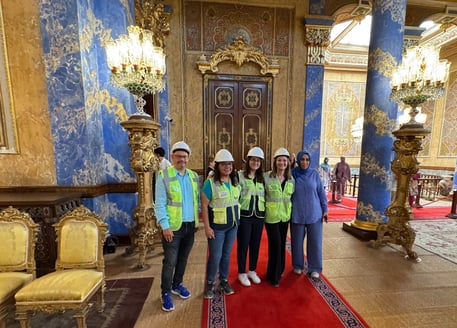
History offers valuable perspective when we look at today’s global economy. Trade routes and economic networks have always shaped how societies interact and develop. In my research on companies’ geopolitical literacy I focused on how companies could become better in anticipating and interpreting change signals in turbulent geopolitical environments. My new research explores how historical trading traditions influence modern economic cooperation. Understanding these dynamics helps leaders interpret global developments more thoughtfully and make better strategic decisions. Understanding the historical developments of the target markets also helps relate to their contemporary ambitions and create sound relationships - people truly value when showing interest towards their culture and heritage.
How can the construction and industrial sectors encourage more women to pursue careers and leadership roles in these industries?
Industrial sectors offer incredibly interesting and impactful careers. Global industry offers a front-row seat to how the world works. My advice would be to stay curious, build strong networks and expertise and not hesitate to pursue international opportunities. Building perspectives is one of the greatest assets one can acquire. These industries benefit greatly from diverse backgrounds and thinking power, and we are already seeing brilliant women taking leadership roles across engineering, manufacturing and industrial innovation.
As industries transition toward more sustainable and innovative solutions, leadership that combines global perspective, collaboration and curiosity becomes increasingly important.
On International Women’s Day, Outi Kallio’s journey reminds us that the future of industry is shaped by diverse voices and determination. “At times I have felt a bit like Marco Polo, packing my backpack and exploring new markets and opportunities. Sometimes it only takes a little extra courage to pursue the unthinkable and create great stories to be told”, she concludes.