
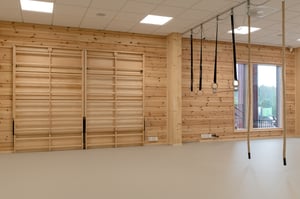
Because meeting fire-performance requirements should not mean concealing the material that defines the architecture.
CLT brings warmth, texture and structural expression to contemporary buildings. But when exposed timber must meet demanding reaction-to-fire requirements, the original design vision can become more difficult to realise.
Additional linings may conceal the timber. Opaque coatings may alter its appearance. Complex treatment systems can add further steps to the construction process.
NORFLAM® W310 offers another approach: verified fire performance that allows the natural character of CLT to remain visible.
The tested CLT system treated with NORFLAM® W310 achieves Euroclass B-s1, d0 reaction-to-fire performance according to EN 13501-1.
The challenge: fire performance without losing the architecture
Architects choose exposed CLT for a reason. Its visible grain, natural variation and structural honesty can shape the identity of an entire space. Yet the more prominent timber becomes in a building, the more important it is to demonstrate that the specified system meets the project’s reaction-to-fire requirements.
The challenge is therefore not only to improve the performance of the timber. It is to do so without covering the material the building was designed to celebrate.
The solution: one treatment, two essential outcomes
NORFLAM® W310 is a bio-based, waterborne and low-VOC fire retardant developed for professional timber treatment.
Applied directly to the CLT surface, it combines fire retardant treatment and surface finish in one solution. A translucent finish preserves the timber’s grain, texture and natural variation while supporting the required reaction-to-fire performance.
- Euroclass B-s1, d0 performance for the tested CLT system
- Natural-looking translucent finish
- Bio-based, waterborne and low-VOC formulation
- One-product treatment and surface finish
- Suitable for industrial, off-site or on-site professional application
- Colour options that enhance rather than conceal the timber
From test results to real buildings
Verified performance matters most when it enables ambitious timber architecture to become a built reality.
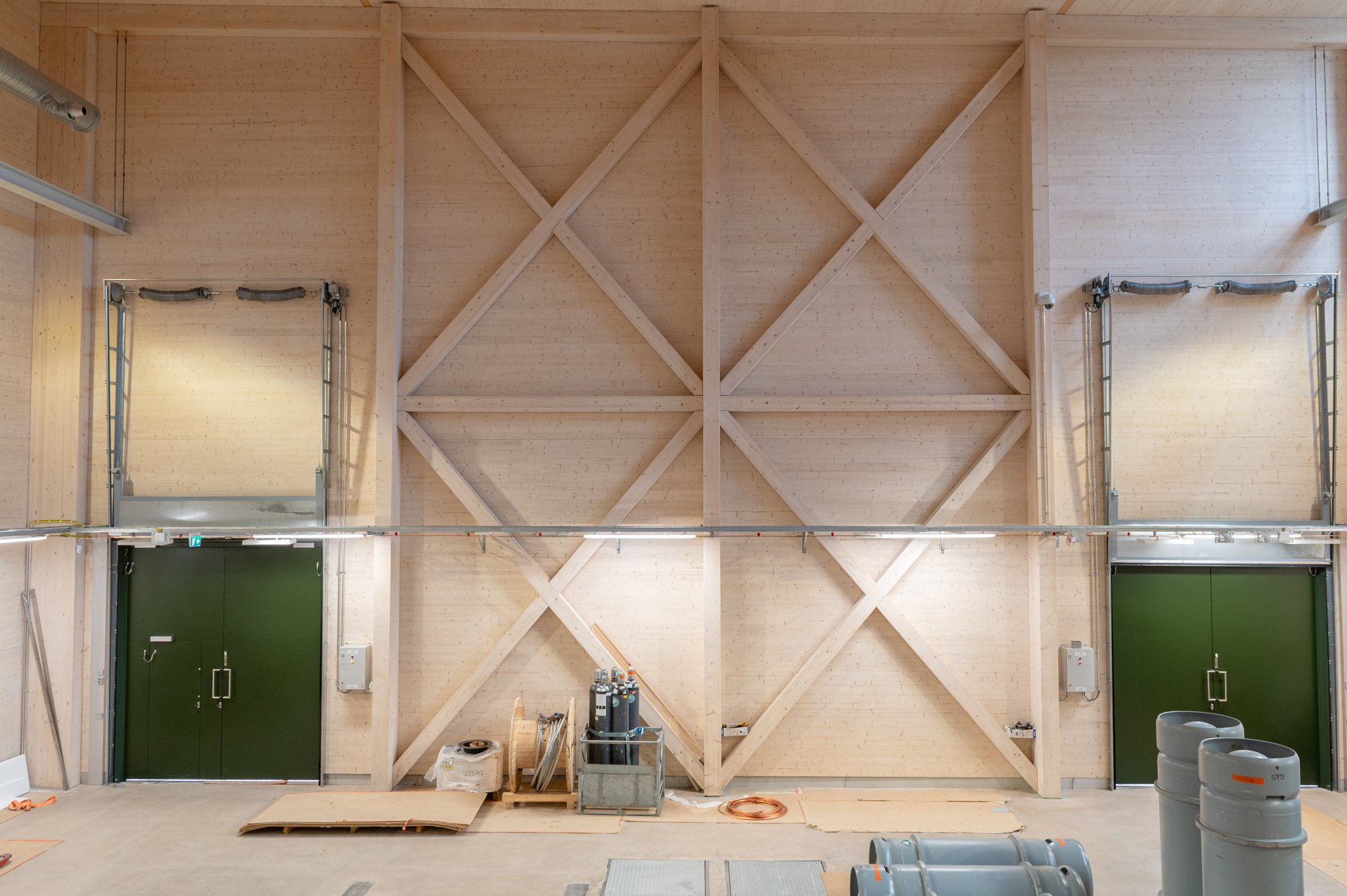
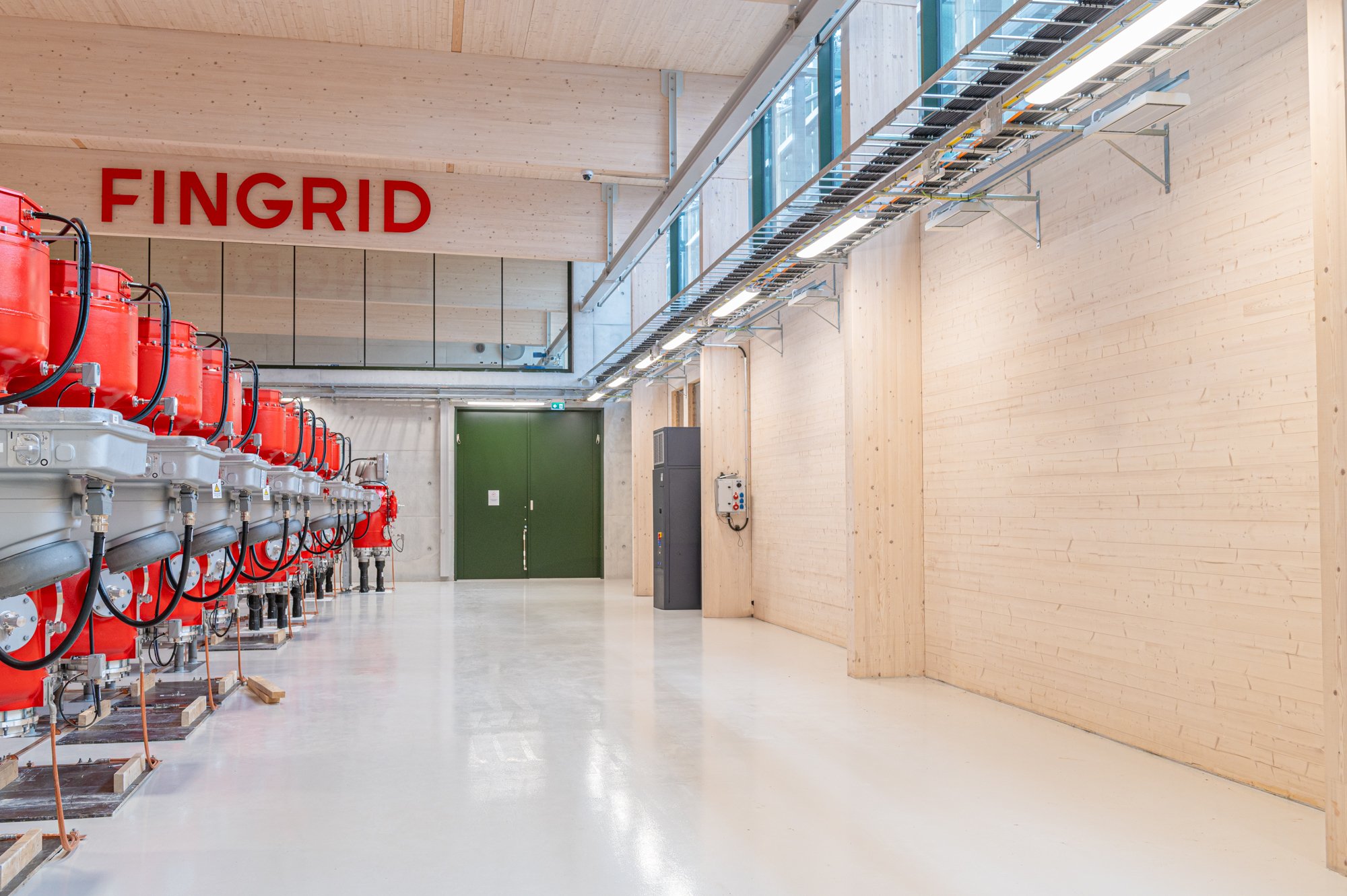
At the Fingrid Hepokorpi Substation in Finland, approximately 200 CLT structures and 40 load-bearing glulam columns helped bring mass timber into a demanding critical-infrastructure environment. The wooden structures achieved the required B-s1, d0 classification, while concealed fixings and a light-coloured fire retardant treatment allowed the timber surfaces to remain fully visible.
The same principle applies in public interiors where the experience of natural wood is central to the design.
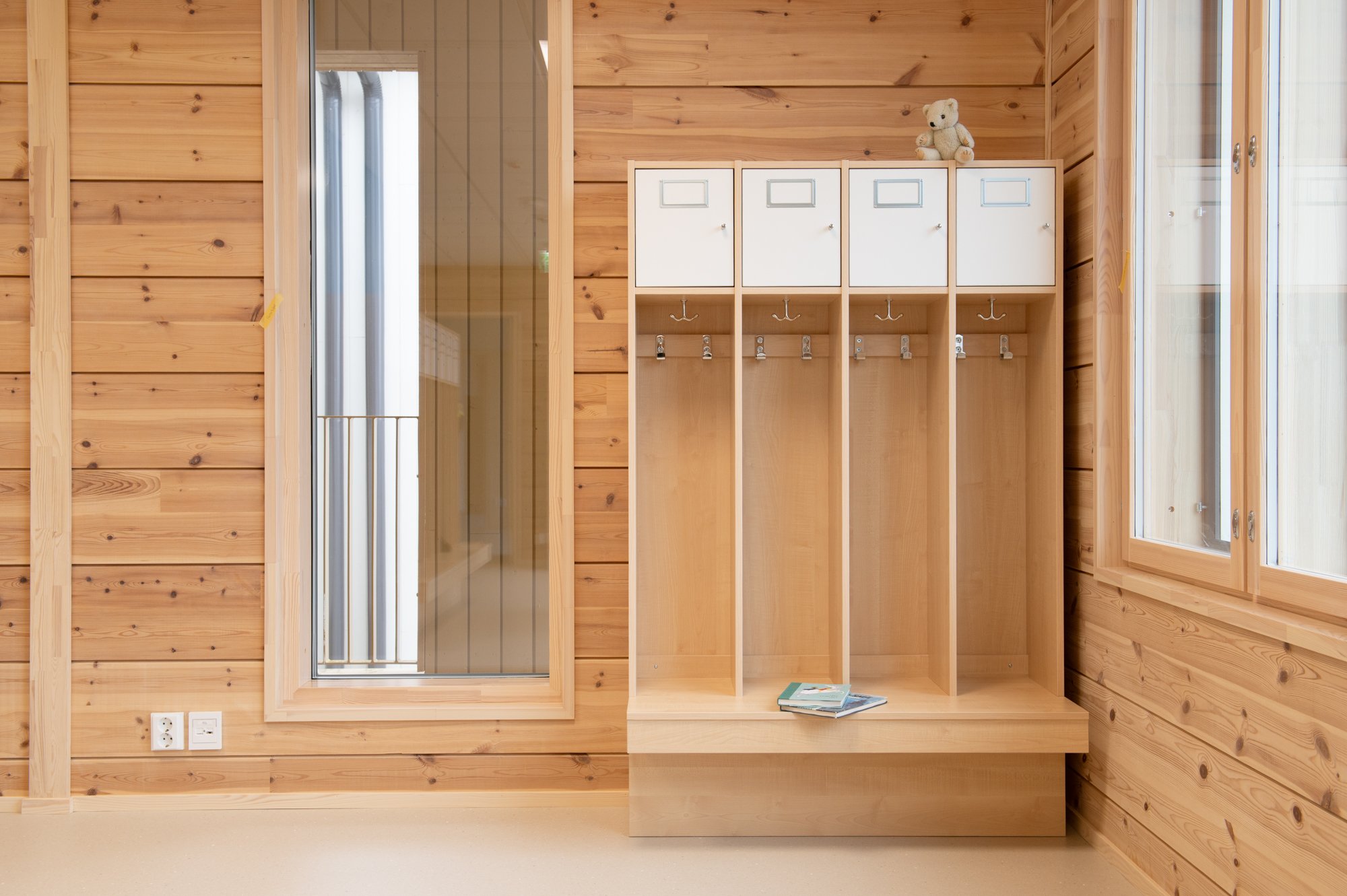
At the Huhtinen Daycare Centre in Porvoo, exposed interior log walls were treated with NORFLAM® W310. The selected light shade enhances the natural colour of the wood, helping create a warm, homelike environment for around 200 children while achieving the required B-s1, d0 reaction-to-fire classification.
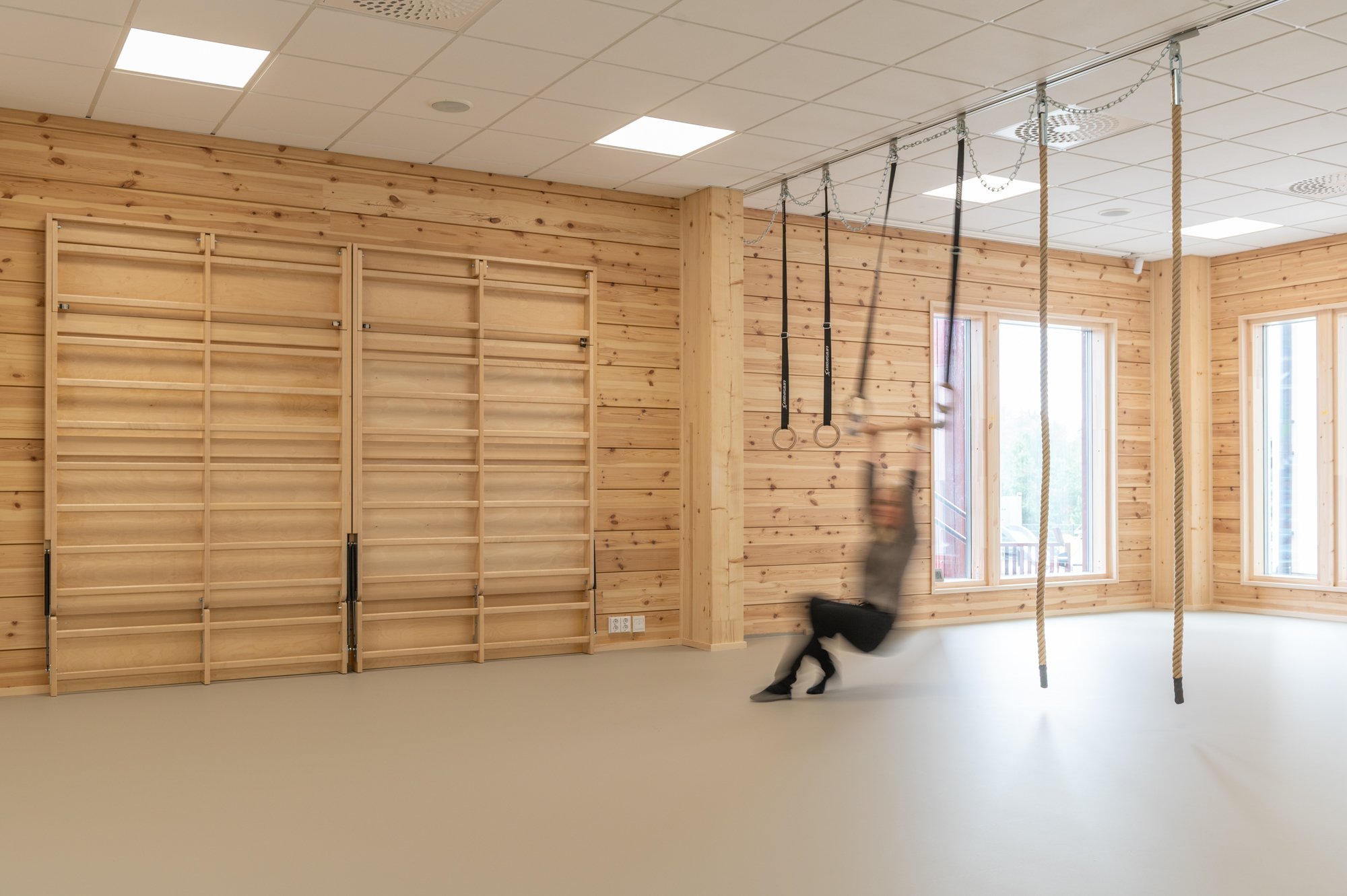
From critical infrastructure to child-centred public spaces, these projects demonstrate how fire performance and visible timber can work together—not compete with one another.
More freedom to design with visible CLT